







Sort By
Per Page
View
 Grid
Grid List
List

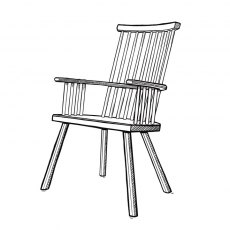

Build a Chair from Bulls%$t
by Christopher Schwarz
Note: You can download a pdf of this book for free here from Lost Art Press and full-size patterns here. You won’t have to register or give up your email. Just click the link, and the book will download to your device. All copies are signed by the author.
Build a comfortable wooden stick chair using only materials and tools found at your home centre. No jigs, no...
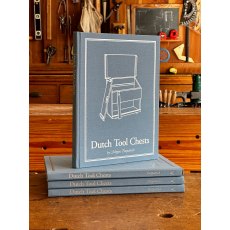

Dutch Tool Chests
by Megan Fitzpatrick, with a foreword by Roy Underhill
''Dutch Tool Chests'' gives you the in depth instruction you need to build your own slant lid tool chest – from choosing materials, to the joinery, the hardware, the interior parts that hold your tools and the paint.
At the same time, the book offers you detailed instructions on how to grow as a hand tool woodworker....

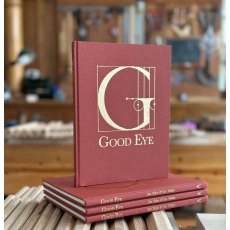
Good Eye
by George Walker & Jim Tolpin
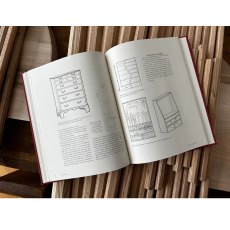
''Good Eye'' – the fifth and newest book in the authors’ ''artisan geometry'' series – explores furniture design by delving into simple proportions in a new and deep way.
Here, Jim Tolpin and George Walker take a close look at iconic pieces of furniture from different periods, and show you the proportional systems...

American Peasant
by Christopher Schwarz
''American Peasant'' is an introduction to a style of furniture and decoration that is almost unheard of in the Americas. Built primarily with tongues, grooves and pegs, the furniture is frequently engraved with geometric symbols that beautify the piece and protect its owner.
With this book, you will learn to build 10 simple pieces using common tools and...
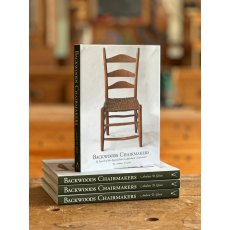

Backwoods Chairmakers
In Search of the Appalachian Ladderback Chairmaker
By Andrew D. Glenn
For more than 200 years, chairmakers in Appalachia built ladderbacks to sell to neighbors and the occasional tourist. It was a tradition that was handed down through generations. But with the rise of furniture factories and mechanisation, woodworker Andy D. Glenn wondered if there were any traditional chairmakers left.
So...
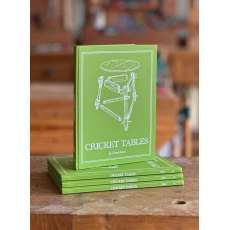
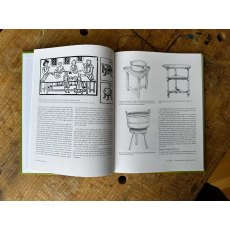
Cricket Tables
by Derek Jones
We will be sending out signed copies of this book until they are out of stock. If you did not want a signed copy then please contact us.
Simplicity, necessity and ingenuity are the three key principles for making cricket tables. This traditional three legged table exists in a variety of forms and woods – no two are the same. So making them follows an organic process –...

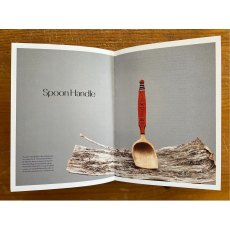
Karvsnitt:
Carving, Pattern & Color in the Slojd Tradition
Carving, Pattern & Color in the Slojd Tradition
by Jögge Sundqvist
You can download an excerpt from this book here.
Cutting patterns and symbols in wood, and enhancing them with vibrant colour, are folk traditions kept alive in the slöjd craft. Through decorations imbued with meaning, chip carving has given soul to slöjd woodcraft throughout history. Even today, chip carving offers a natural complement to an artfully crafted...

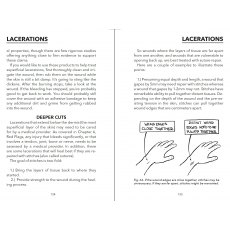
Workshop Wound Care
by Dr. Jeffery Hill
“Workshop Wound Care” – part of the Lost Art Press pocket book series – delves right to the heart of what you need to know when faced with common workshop injuries, from lacerations, to puncture wounds to material in the eye.
The author, Dr. Jeffery Hill, is an emergency room physician and an active woodworker. So he knows exactly the information a...
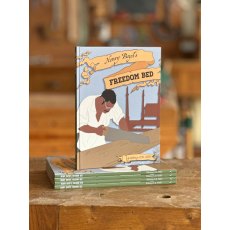

Henry Boyd's Freedom Bed
A children’s book written and illustrated by Whitney L.B. Miller
“Henry Boyd’s Freedom Bed” is the true story of an enslaved Kentucky man who purchases his freedom and becomes one of the most innovative and important furniture makers in 19th-century Cincinnati.
In this children’s picture book, appropriate for ages 3-8, you can follow young Boyd as he learns to farm...
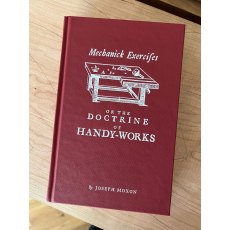
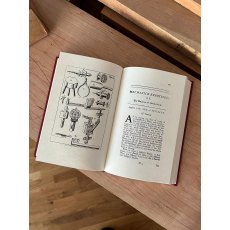
Mechanick Exercises
Joseph Moxon’s “Mechanick Exercises or the Doctrine of Handy-Works,” is the first English-language book on woodworking (and other trades) – but it was written by a man who wasn’t a woodworker. Instead, Moxon (1627-1691) was a printer, a maker of mathematical instruments and (for a time) hydrographer to King Charles II.
Oh, and the engravings of woodworking tools in...


Cadi & the Cursed Oak
You can download an excerpt of this book here. An audio pronunciation guide to the Welsh words in the book is here.
By Kara Gebhart Uhl, illustrations by Elin Manon
"Cadi brought the cup’s silver rim to her lips. What she didn’t know was that buried deep in the cup’s oak sleeve were spirits’ stories, long forgotten tales of hobgoblins and demons and death and sorrow,...

Euclid's Door:
Building the Tools of 'By Hand & Eye'
Building the Tools of 'By Hand & Eye'
By Geo. R Walker & Jim Tolpin
Illustrations by R. Keith Mitchell & Barb Walker
“Euclid's Door: Building the Tools of ‘By Hand & Eye’” is an illustrated how to journey through building the ancient tools that still help us to build, well, everything today.
You’ll learn how to use basic, easy-to-follow artisan geometry to make eight indispensable...

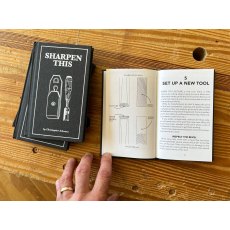

Sharpen This
by Christopher Schwarz
Sharpening is not a sport.
If you want to be a better woodworker, you need to learn to sharpen. If you want to be a better sharpener, you need to stop paying so much attention to tertiary bevels and carbide formations in steel and start paying attention to the wood. If the wood is cut cleanly, then your tools are sufficiently sharp. If the wood is torn out and covered in...

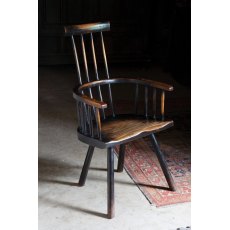
The Belligerent Finisher
By John Porritt
One aspect of furniture finishing that has not been fully explained is how to achieve the gently worn, warm and human surfaces that you find on antiques. "The Belligerent Finisher" changes that. Furniture restorer and chairmaker John Porritt explains all the steps in taking a new chair and transforming it into something that looks like it’s 200 years old. The goal...
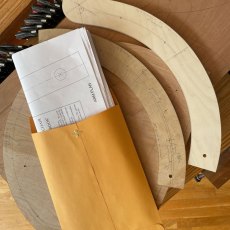
The Stick Chair Book - Full-size Plans
To remove one more barrier to making a stick chair, we have created this set of full-size paper patterns of all the important components for the five chairs in "The Stick Chair Book".
The five 22" x 34" sheets contain full-scale drawings of all the seats, arms, backrests, shoes and combs for the chairs. The drawings also include all the mortise locations, drilling sightlines...
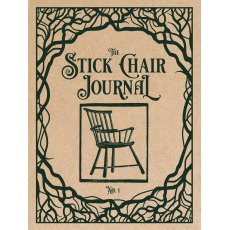
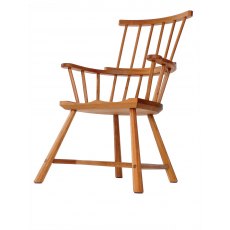
The Stick Chair Journal - Issue No 1
By Christopher Schwarz
This is issue No. 1 of The Stick Chair Journal, which Lost Art Press planned as an annual publication to expand the universe of all things stick chair: More history. More plans. More techniques. Reviews of tools. And Big Thoughts. It is a supplement to "The Stick Chair Book."
In this issue, you'll find:
• A Lousy Way to Run a Railroad: An explanation...

The Handcrafted Life of Dick Proenneke
by Monroe Robinson
Millions of North American TV viewers first met Dick Proenneke through the programme “Alone in the Wilderness,” which documents Dick’s 30 year adventure in the Alaskan wilderness. On the shores of Twin Lakes, Dick built his cabin and nearly all of the household objects he required to survive, from the ingenious wooden hinges on his front door to the metal ice...


Shop Tails:
The Animals Who Help Us Make Things Work
The Animals Who Help Us Make Things Work
By Nancy R. Hiller
In this singular collection of essays, Nancy Hiller relates the ways in which non-human animals – some companions, others wild or raised on farms – have provided warmth and comfort, prompted laughter and offered examples of courage or composure in the face of distressing events.
“Shop Tails” is a loving tribute to the animals whose lives have been intertwined...
Make a Chair from a Tree:
Third Edition
Third Edition
By Jennie Alexander
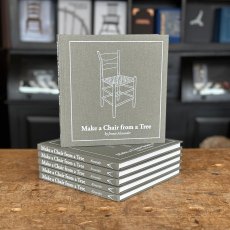
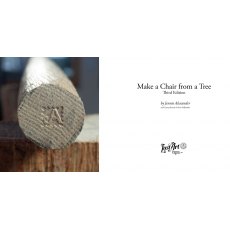
In 2014, Jennie Alexander somewhat reluctantly agreed to a third edition of her 1978 seminal book on green woodworking, “Make a Chair From a Tree” – a book that launched the careers of thousands of woodworkers and helped ignite a green woodworking movement in this country.
Her reluctance wasn’t due to a lack of passion for the book’s subject –...
The Workshop Book
By Scott Landis; foreword by Roy Underhill
First published in 1991, "The Workshop Book" by Scott Landis remains the most complete book about every woodworker's favourite place: the workshop.
“The Workshop Book” is a richly illustrated guided tour of some of the world’s most inspiring workshops — from garage to basement shops, from mobile to purpose-built...


The Woodworker's Pocket Book
Edited by Charles H. Hayward
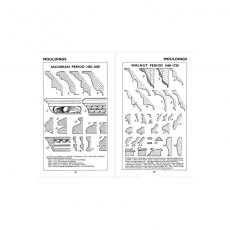
“The Woodworker’s Pocket Book” is small – just 4” x 6-1/2” – but it contains 112 pages of critical woodworking information for the hand tool woodworker.
Edited by the great Charles H. Hayward and published in 1949, “The Woodworker’s Pocket Book” is a guide to everything from finishing recipes to drawing ellipses...
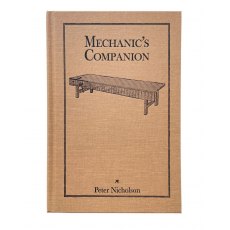
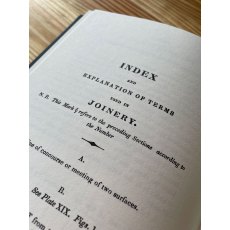
Mechanic's Companion
by Peter Nicholson
“Mechanic’s Companion” is one of the foundational English-language texts in woodworking and the building trades. First published in 1812, "Mechanic's Companion" is an invaluable and thorough treatment of techniques, with 40 plates that provide an excellent and detailed look at the tools of the time, along with a straightforward chapter on the geometry...

The Workbench Book
by Scott Landis
First published in 1987, "The Workbench Book" by Scott Landis remains the most complete book on the most important tool in the woodworker’s shop.
"The Workbench Book" is a richly illustrated guided tour of the world’s best workbenches — from a traditional Shaker bench to the mass-produced Workmate. Author and workbench builder Scott Landis...
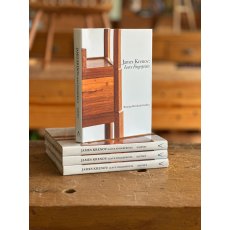

James Krenov:
Leave Fingerprints
Leave Fingerprints
By Brendan Bernhardt Gaffney
James Krenov (1920-2009) was one of the most influential woodworking writers, instructors and designers of the 20th century. His best-selling books – starting with “A Cabinetmaker’s Notebook” – inspired tens of thousands of people to pick up the tools and build things to the highest standard.
Yet, little is known about his life, except...
Country Woodcraft:
Then & Now
Then & Now
By Drew Langsner
In 1978, Drew Langsner released his book “Country Woodcraft” to the world, and it sparked a movement – still expanding today – of hand-tool woodworkers who make things with mostly green wood.
The 304 pages of “Country Woodcraft” showed you how to split wood from the forest and shape into anything you might need, from a spoon to a bowl, from...

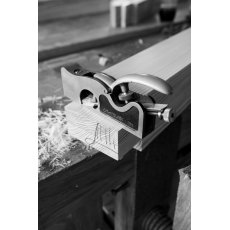
The Anarchist's Workbench
By Christopher Schwarz
The Anarchist’s Workbench” is – on the one hand – a detailed plan for a simple workbench that can be built using construction lumber and basic woodworking tools. But it’s also the story of Christopher Schwarz’s 20 year journey researching, building and refining historical workbenches until there was nothing left to improve.
Along the...


Kitchen Think
A guide to design and construction, from refurbishing to renovation


Honest Labour:
The Charles H. Hayward Years
The Charles H. Hayward Years
“Honest Labour” is a collection of essays from The Woodworker magazine while the legendary Charles H. Hayward was editor (1936-1966). This book will be the fifth and final volume in the Lost Art Press series from The Woodworker.
When Lost art Press started on The Woodworker project more than a decade ago they didn’t intend to publish “Honest Labour.” The series was...
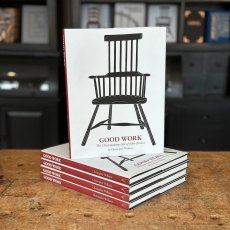

Good Work:
The Chairmaking Life of John Brown
The Chairmaking Life of John Brown
by Christopher Williams
“Good Work: The Chairmaking Life of John Brown” by Christopher Williams is the first biography of one of the most influential chairmakers and writers of the 20th century: Welshman John Brown.
The book’s title of “Good Work” was an expression John Brown used to describe a noble act or thing. He once mused he wanted to create a “Good Work”...
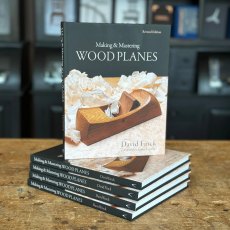
Making & Mastering Wood Planes (Revised Edition)
By David Finck. Foreword by James Krenov
No matter what sort of handplane you use, “Making & Mastering Wood Planes” is perhaps the best guide available to understanding, tuning and using these tools at a high level.
Written by a graduate of the College of the Redwoods (now The Krenov School), “Making & Mastering Wood Planes” is ostensibly about the laminated handplanes...
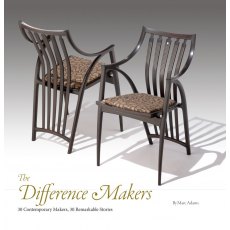
The Difference Makers
by Marc Adams
Thanks to the internet, you can see a lot of interesting work with ease. But it’s easy to forget that the vast majority of the images on your screen are of pieces that are derivative, merely acceptable in their craftsmanship and were made by people at the beginning of their journey.
When you encounter true greatness it is shocking, inspiring and a bit humbling. The hair on...
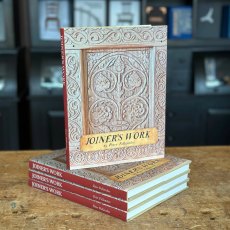
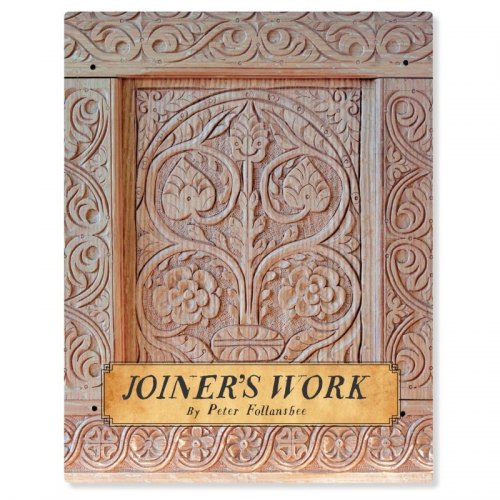
Joiner's Work
by Peter Follansbee
Forget what you think about 17th-century New England furniture. It’s neither dark nor boring. Instead, it’s a riot of geometric carvings and bright colours – all built upon simple constructions that use rabbets, nails and mortice-and-tenon joints.
Peter Follansbee has spent his adult life researching this beguiling time period to understand the simple tools...
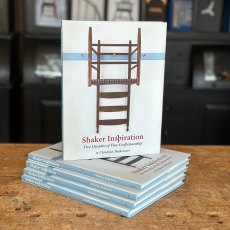
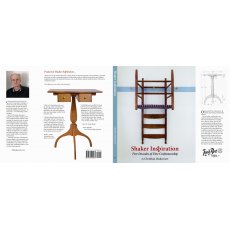
Shaker Inspiration
Five Decades of Fine Craftsmanship

The Intelligent Hand
By David Binnington Savage
"The Intelligent Hand" is a peek into a woodworking life that's at a level that most of us can barely imagine. The customers are wealthy and eccentric. The designs have to leap off the page. And the craftsmanship has to be utterly, utterly flawless.
How does one get to this point? And how do you stay there?
One answer to these questions is in this book....
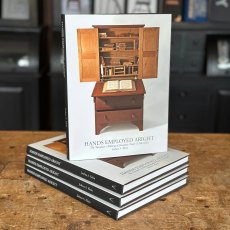
Hands Employed Aright
By Joshua A. Klein
Jonathan Fisher (1768-1847) was the first settled minister of the frontier town of Blue Hill, Maine. Harvard-educated and handy with an axe, Fisher spent his adult life building furniture for his community. Fortunately for us, Fisher recorded every aspect of his life as a woodworker and minister on the frontier.
In this book, author Joshua A. Klein, the founder of , examines...

Welsh Stick Chairs
By John Brown
Welsh Stick Chairs is a small but mighty book. At 104 pages long, this book can be read in an afternoon, but it has changed the lives of thousands of woodworkers all over the globe.
John Brown (1933-2008) was a chairmaker in Wales who specialized in Welsh stick chairs, a vernacular form of furniture that was typically made by the end users. Compared to Windsor chairs, Welsh stick...
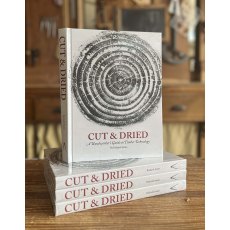
Cut & Dried
By Richard Jones
Serious woodworkers have long been starved of accurate information on wood technology that's explained in language for artisans - instead of for scientists.
Author Richard Jones has spent his entire life as a professional woodworker and has dedicated himself to researching the technical details of wood in great depth, this material being the woodworker's most important...


Ingenious Mechanicks
by Christopher Schwarz
Workbenches with screw-driven vises are a fairly modern invention. For more than 2,000 years, woodworkers built complex and beautiful pieces of furniture using simpler benches that relied on pegs, wedges and the human body to grip the work.
While it's easy to dismiss these ancient benches as obsolete, they are - at most - misunderstood.
For the last three years,...
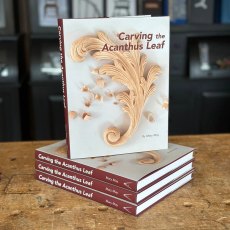
Carving the Acanthus Leaf
By Mary May
Learning to carve the acanthus leaf is – for carvers – like a pianist learning a Chopin étude, a young oil painter studying the genius of Rembrandt or an aspiring furniture maker learning to cut dovetails by hand.
For carvers, especially those who focus on Classical Western ornament, there comes a time they will inevitably encounter the acanthus leaf, learn it,...

From Truths to Tools
By Jim Tolpin and George Walker, Illustrated by Andrea Love
Good books give you a glimpse of small truths - about workbenches, joinery or sharpening, for example. Great books, on the other hand, stitch together seemingly disparate ideas to present a new way of looking at the whole world, from your marking awl, to your hand or to the line of the horizon.
"From Truths to Tools" is a hand-illustrated...
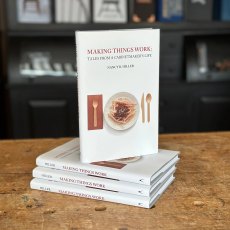
Making Things Work:
Tales From a Cabinetmaker's Life
Tales From a Cabinetmaker's Life
By Nancy R. Hiller
Furniture making, once a basic way to earn a living through an arrangement between makers and clients, has been discovered, like a rosy-cheeked girl plucked from a dairy farm in Devon and made over into a London model
For many of us, making furniture and cabinetry is still a way to earn a living, however marginal. We may do what we love every day, to paraphrase the marketing...

Woodworking in Estonia
By Ants Viires; translation by Mart Aru
It's one of Roy Underhill's three favourite woodworking books, but you can't buy a copy of it for love or money. Translated into English without the author's permission in the late 1960s, "Woodworking in Estonia" has been a cult classic ever since it first surfaced.
It is, according to Underhill, "one of the best books on...


The Woodworker:
The Charles H. Hayward Years Vol. IV - The Shop & Furniture
The Charles H. Hayward Years Vol. IV - The Shop & Furniture
There is little doubt that Charles H. Hayward (1898-1998) was the most important workshop writer and editor of the 20th century. Unlike any person before (and perhaps after) him, Hayward was a trained cabinetmaker and extraordinary illustrator, not to mention an excellent designer, writer, editor and photographer.
Add to all that the fact that Hayward was, according to Robert Wearing, a "workaholic,"...

The Woodworker:
The Charles H. Hayward Years Vol. III - Joinery
The Charles H. Hayward Years Vol. III - Joinery
There is little doubt that Charles H. Hayward (1898-1998) was the most important workshop writer and editor of the 20th century. Unlike any person before (and perhaps after) him, Hayward was a trained cabinetmaker and extraordinary illustrator, not to mention an excellent designer, writer, editor and photographer.
Add to all that the fact that Hayward was, according to Robert Wearing, a "workaholic,"...

The Woodworker:
The Charles H. Hayward Years Vol. II - Techniques
The Charles H. Hayward Years Vol. II - Techniques
There is little doubt that Charles H. Hayward (1898-1998) was the most important workshop writer and editor of the 20th century. Unlike any person before (and perhaps after) him, Hayward was a trained cabinetmaker and extraordinary illustrator, not to mention an excellent designer, writer, editor and photographer.
Add to all that the fact that Hayward was, according to Robert Wearing, a "workaholic,"...

The Woodworker:
The Charles H. Hayward Years Vol. I - Tools
The Charles H. Hayward Years Vol. I - Tools
There is little doubt that Charles H. Hayward (1898-1998) was the most important workshop writer and editor of the 20th century. Unlike any person before (and perhaps after) him, Hayward was a trained cabinetmaker and extraordinary illustrator, not to mention an excellent designer, writer, editor and photographer.
Add to all that the fact that Hayward was, according to Robert Wearing, a "workaholic,"...


The Anarchist's Design Book:
Expanded Edition
Expanded Edition
Why is this book on sale? Basically Lost Art Press need some storage space as the floors are creaking in their new Anthe Building. Please visit the Lost Art Press Blog for more information.
By Christopher Schwarz
Most of the American furniture we celebrate as the pinnacle of design is overbearing, over-embellished and a monument to waste and excess.
These high styles of furniture took hold...